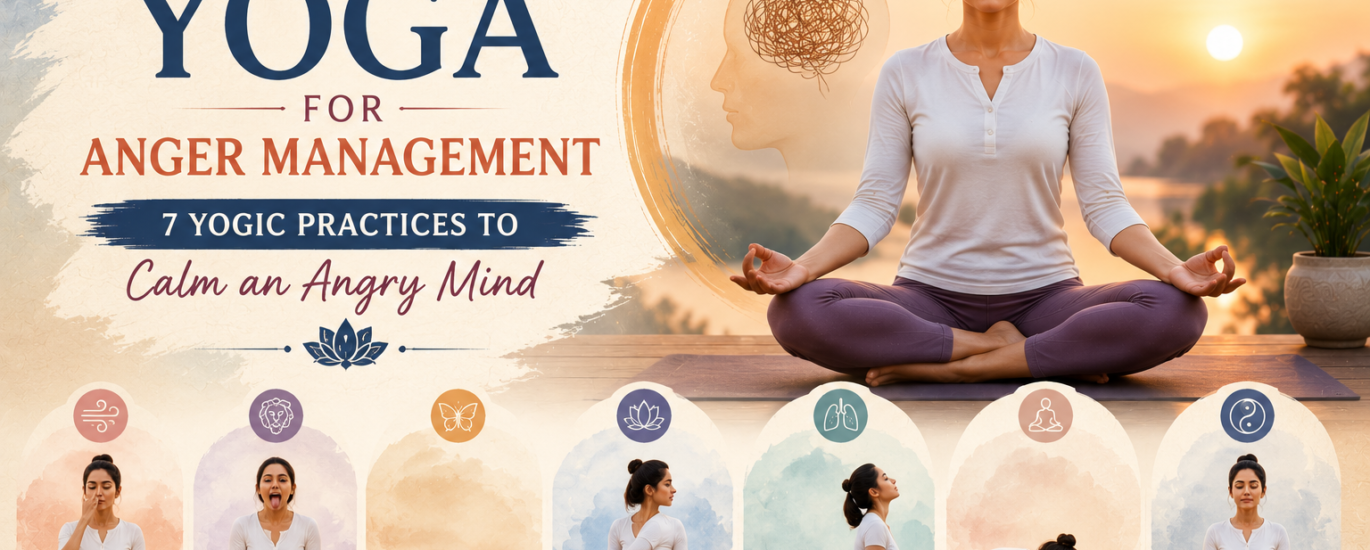




Anger is a natural human emotion. Everyone experiences it from time to time. However, when anger becomes frequent, intense, or difficult to control, it can affect relationships, health, decision-making, and overall quality of life.
In today’s fast-paced world, stress, pressure, frustration, and constant stimulation often create emotional overload. Many people react quickly without realizing that their mind has become restless and overwhelmed.
Yoga offers a different approach.
Rather than suppressing anger or expressing it impulsively, yoga teaches us how to observe emotions, regulate our reactions, and cultivate inner balance.
Yoga for Anger Management is not about eliminating anger completely. It is about understanding the mind, calming the nervous system, and responding with greater awareness.
As Maharshi Patanjali explains:
“योगश्चित्तवृत्तिनिरोधः”
Yoga is the calming of the fluctuations of the mind.
When the mind becomes calmer, emotional reactions naturally become more balanced.
Why Does Anger Arise?
According to yogic philosophy, anger often arises when expectations, desires, attachments, or fears are disturbed.
An angry mind is usually not created by a single event. It develops through accumulated stress, mental tension, fatigue, and emotional imbalance.
Common triggers include:
- Stress
- Lack of sleep
- Mental exhaustion
- Relationship conflicts
- Workplace pressure
- Unresolved emotions
- Constant digital stimulation
When these factors accumulate, the mind becomes reactive and less capable of responding calmly.
Yoga helps break this cycle.
How Yoga Supports Anger Management
Yoga for Anger Management works on multiple levels.
First, it relaxes the body and releases physical tension. Second, it improves breathing patterns, which directly influence the nervous system. Third, it develops self-awareness, helping practitioners recognize emotional reactions before they become overwhelming.
Regular yoga practice may help:
- Reduce emotional reactivity
- Improve self-control
- Lower stress levels
- Improve sleep quality
- Enhance mindfulness
- Create emotional balance
This holistic approach makes yoga particularly valuable for managing anger naturally.
1. Shashankasana: The Moon Pose for Emotional Cooling
Shashankasana is one of the most calming yoga postures for an angry mind. The gentle forward bend encourages relaxation and helps quiet mental agitation.
Benefits may include:
- Reduced mental tension
- Improved breathing
- Relaxation of the nervous system
- Greater emotional stability
The pose encourages surrender and softness, which can counter feelings of frustration and aggression.
2. Balasana: Returning to Stillness
Balasana, or Child’s Pose, provides a sense of safety and grounding. When emotions become intense, this posture allows the body and mind to slow down.
Practicing Balasana with conscious breathing may help:
- Calm racing thoughts
- Reduce anxiety
- Relax the shoulders and back
- Encourage emotional release
Sometimes the most effective response to anger is simply creating space to breathe and pause.
3. Marjariasana: Releasing Emotional Tension
Marjariasana, often practiced as Cat Stretch, gently mobilizes the spine while synchronizing movement and breath. This simple practice helps release accumulated tension stored in the body.
Benefits include:
- Improved body awareness
- Reduced stiffness
- Better breathing coordination
- Relaxation of the nervous system
The rhythmic movement often creates a soothing effect on the mind.
4. Anulom Vilom: Balancing the Mind Through Breath
Breathing practices play a central role in Yoga for Anger Management. Among them, Anulom Vilom is one of the most effective. This alternate nostril breathing technique helps balance mental activity and promote emotional stability.
Regular practice may help:
- Reduce stress
- Improve concentration
- Calm emotional turbulence
- Create mental clarity
In yogic tradition, balanced breath supports a balanced mind.
5. Bhramari Pranayama: The Humming Bee Breath
Bhramari Pranayama is particularly useful when the mind feels agitated or overwhelmed. The gentle humming sound creates a soothing vibration that encourages relaxation.
Benefits include:
- Reduced anger and frustration
- Improved focus
- Lower mental stress
- Enhanced emotional balance
Many practitioners find that a few rounds of Bhramari create an immediate sense of calm.
6. Shavasana: Deep Relaxation for the Mind
An angry mind often exists in a state of constant tension. Shavasana teaches the body how to relax completely. Although it appears simple, this posture can be profoundly transformative.
Benefits include:
- Deep physical relaxation
- Reduced stress hormones
- Improved emotional regulation
- Mental clarity
Practicing Shavasana regularly helps the nervous system recover from daily stress.
7. Meditation: Observing Rather Than Reacting
Meditation is one of the most powerful tools for emotional transformation. Rather than fighting anger, meditation teaches us to observe thoughts and emotions without becoming controlled by them.
Patanjali teaches:
“तदा द्रष्टुः स्वरूपेऽवस्थानम्”
Then the Seer rests in his own true nature.
This awareness allows us to respond thoughtfully instead of reacting impulsively.
Even five to ten minutes of daily meditation can gradually improve emotional resilience.
The Role of Daily Yoga in Emotional Balance
Anger is often a symptom of deeper imbalance. This is why occasional practice may provide temporary relief, but consistent practice creates lasting change.
The Daily Yoga Benefits extend beyond flexibility and fitness.
Regular yoga practice supports:
- Mental clarity
- Emotional awareness
- Better sleep
- Improved breathing
- Stress reduction
- Greater self-control
Over time, these benefits help create a calmer and more balanced state of mind.
Lifestyle Habits That Support Anger Management
Yoga extends beyond the mat.
To support emotional balance:
- Get adequate sleep
- Reduce excessive screen time
- Practice mindful breathing
- Spend time in nature
- Maintain a balanced routine
- Cultivate gratitude
These simple habits complement yoga and help reduce emotional overload.
The Yogic Secret to Inner Peace
The goal of Yoga for Anger Management is not to become emotionless. Rather, it is to develop awareness and balance. Anger may still arise, but yoga helps create a space between the emotion and the reaction.
Within that space lies choice, wisdom, and self-control. The calmer the mind becomes, the easier it is to respond with clarity rather than impulse.
Final Thoughts
Yoga for Anger Management offers a gentle yet powerful path toward emotional balance.
Through mindful movement, conscious breathing, relaxation, and meditation, yoga helps calm the nervous system and cultivate inner peace. The transformation does not happen overnight. However, with consistent practice, many people discover that they become less reactive, more patient, and more aware of their emotions.
As the teachings of yoga remind us, peace is not found by controlling the world around us. It begins by understanding and calming the mind within. A few minutes of daily practice can become the first step toward a calmer mind, healthier relationships, and a more balanced life.