



Your spine is one of the most important structures in the human body. It supports your posture, protects the nervous system, enables movement, and serves as the central pillar of physical stability. Yet despite its importance, many people unknowingly engage in daily habits that gradually weaken their spine and affect overall Spine Health.
Modern lifestyles have introduced conveniences that often come at a cost. Long hours of sitting, excessive screen time, poor sleeping positions, and lack of movement place continuous stress on the spine. The effects may not appear immediately, but over months and years these habits can contribute to stiffness, discomfort, poor posture, reduced mobility, and chronic back problems.
In yogic philosophy, the spine is regarded as more than a physical structure. It is considered the central channel through which vital energy flows. A healthy spine supports not only physical well-being but also mental clarity, vitality, and balanced living.
The ancient yogic texts emphasize the importance of stability and comfort within the body. Maharishi Patanjali explains:
“स्थिरसुखमासनम्”
A posture should be steady and comfortable.
This simple teaching reminds us that maintaining Spine Health requires awareness, balance, and proper habits in daily life.
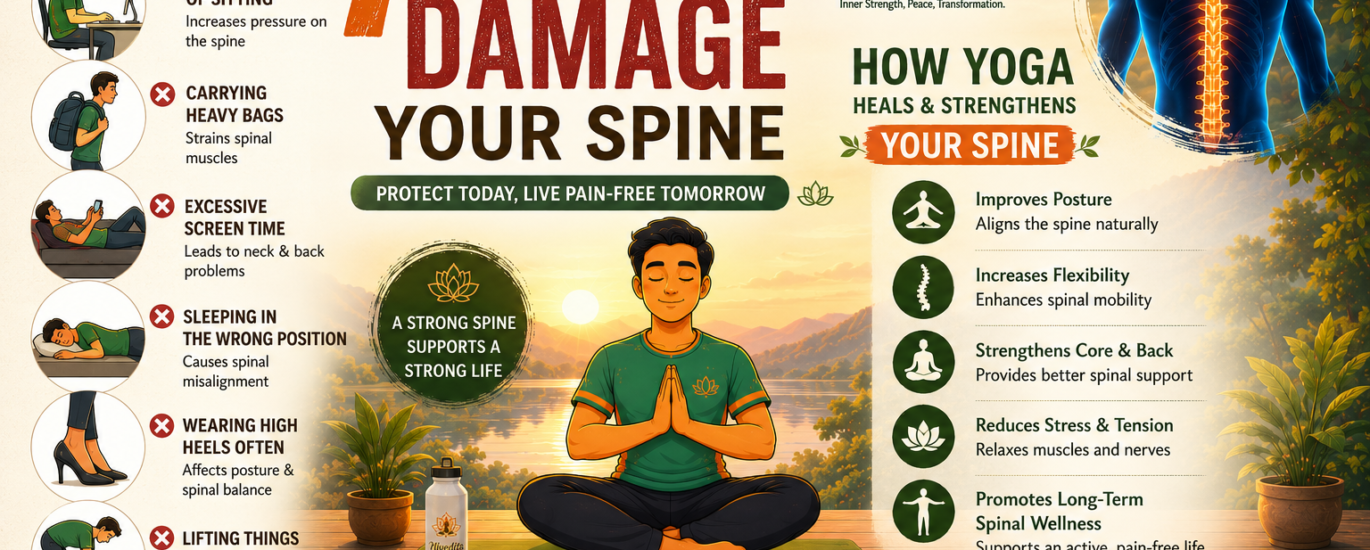
Let us explore seven common habits that may secretly damage your spine and what you can do to protect it.
1. Sitting for Long Hours Without Movement
One of the biggest threats to Spine Health today is prolonged sitting.
Whether working at a desk, driving, or spending time on digital devices, many people remain seated for several hours without adequate movement. Sitting continuously places pressure on the lower back and can weaken the muscles responsible for supporting the spine.
Over time, prolonged sitting may lead to:
- Poor posture
- Lower back discomfort
- Tight hips
- Reduced spinal mobility
- Weak core muscles
The human body was designed for movement. Even short breaks every hour can help reduce stress on the spine and improve circulation.
Simple yoga stretches and walking for a few minutes can make a significant difference.
2. Looking Down at Mobile Phones Constantly
The widespread use of smartphones has created a modern posture problem often referred to as “tech neck.”
Many people spend hours every day looking downward at screens. This position places excessive strain on the neck and upper spine.
A healthy head weighs approximately 4 to 5 kilograms. However, when the head tilts forward repeatedly, the pressure on the cervical spine increases dramatically.
Common consequences include:
- Neck stiffness
- Shoulder tension
- Headaches
- Upper back discomfort
- Poor posture
Maintaining Spine Health requires becoming aware of how frequently we look down during the day.
Holding devices closer to eye level and taking regular breaks can reduce unnecessary strain.
3. Poor Sitting Posture
Many people are unaware of their posture while working, studying, or relaxing.
Slouching may seem harmless initially, but it gradually alters spinal alignment and increases stress on muscles and ligaments.
Poor posture often causes:
- Rounded shoulders
- Forward head position
- Lower back strain
- Reduced breathing efficiency
- Muscle fatigue
Good Spine Health begins with conscious posture awareness.
When sitting, keep the spine naturally aligned, shoulders relaxed, and feet supported comfortably on the floor.
Yoga practices such as Tadasana help develop postural awareness and strengthen the muscles responsible for maintaining proper alignment.
4. Lack of Physical Activity
Movement nourishes the spine.
Unfortunately, modern lifestyles often encourage inactivity. Many people spend most of the day sitting and rarely engage in stretching, walking, or exercise.
Without regular movement, the spine loses flexibility and supporting muscles become weak.
Poor Spine Health caused by inactivity may result in:
- Reduced flexibility
- Joint stiffness
- Weak postural muscles
- Increased risk of back pain
The Hatha Yoga tradition emphasizes regular movement and balance within the body.
Practicing yoga regularly helps maintain flexibility, mobility, and strength while supporting healthy spinal function.
Even fifteen minutes of mindful movement each day can help maintain long-term spinal wellness.
5. Sleeping in Poor Positions
Many people carefully manage their posture during the day but overlook their sleeping habits. Since we spend nearly one-third of our lives sleeping, poor sleep posture can significantly affect Spine Health. Sleeping on an unsupportive mattress or using inappropriate pillows may place unnecessary stress on the neck and back.
Signs that your sleeping position may be affecting your spine include:
- Morning stiffness
- Neck pain
- Lower back discomfort
- Interrupted sleep
A supportive mattress and proper sleeping posture help maintain the natural curves of the spine.
Good sleep is one of the simplest yet most effective ways to protect spinal health.
6. Lifting Objects Incorrectly
Improper lifting is another common habit that damages the spine. Many people bend from the waist when lifting heavy objects rather than using their legs and core muscles. This movement places excessive pressure on the lower back and increases the risk of injury.
Protecting Spine Health during lifting involves:
- Bending the knees
- Keeping the object close to the body
- Maintaining a neutral spine
- Avoiding sudden twisting movements
The goal is not simply strength but awareness of body mechanics.
Yoga teaches conscious movement, helping individuals become more mindful of how they use their bodies during everyday activities.
7. Ignoring Stress and Emotional Tension
One often-overlooked factor affecting Spine Health is emotional stress. Mental stress frequently manifests physically within the body. The shoulders tighten, breathing becomes shallow, and muscles surrounding the spine remain under continuous tension.
Over time, chronic stress may contribute to:
- Neck tightness
- Upper back tension
- Reduced mobility
- Poor posture
- Fatigue
Patanjali Yoga Sutras describe yoga as:
“योगश्चित्तवृत्तिनिरोधः”
Yoga is the calming of the fluctuations of the mind. When the mind becomes calmer, the body naturally relaxes.
Practices such as mindful breathing, meditation, and gentle yoga help release accumulated tension and support spinal wellness from within.
How Yoga Supports Spine Health Naturally
One of the greatest benefits of yoga is its ability to improve Spine Health through a holistic approach. Yoga does not focus solely on strengthening muscles. It also develops flexibility, balance, posture awareness, breathing efficiency, and mental calmness.
Regular yoga practice may help:
- Improve posture
- Increase spinal mobility
- Strengthen supporting muscles
- Reduce stiffness
- Improve balance
- Enhance body awareness
Beneficial practices often include:
- Tadasana
- Konasana
- Ardha Kati Chakrasana
- Trikonasana
- Bhujangasana
These postures gently encourage spinal alignment while improving flexibility and strength.
The Yogic Perspective on Spine Health
In yogic tradition, the spine is viewed as the central axis of the body and an important pathway for life energy. A balanced spine supports not only physical movement but also mental clarity and emotional stability. The Hatha Yoga Pradipika emphasizes discipline and regular practice as essential elements of health and vitality.
Rather than waiting for discomfort to appear, yoga encourages preventive care through awareness and conscious living. This approach aligns perfectly with modern understanding of long-term spinal wellness.
Final Thoughts
Spine Health is not determined by a single exercise or treatment. It is shaped by the small choices we make every day. The way we sit, stand, move, sleep, breathe, and manage stress all influence the condition of our spine.
The seven habits discussed in this article may seem ordinary, yet their cumulative impact can be significant over time. Fortunately, awareness creates change. By improving posture, moving regularly, reducing stress, and incorporating yoga into daily life, it is possible to support a healthier, stronger, and more resilient spine.
A healthy spine supports a healthy life. When we care for the spine, we create a stronger foundation for movement, vitality, balance, and well-being for years to come.