




Yoga vs Gym is one of the most common discussions in modern fitness culture. Some people choose the gym for muscle strength and physical transformation, while others turn toward yoga for flexibility, peace of mind, and balanced living. Both paths support health in different ways, yet their purpose, philosophy, and long-term effects on life are very different.
In today’s stressful lifestyle, fitness is no longer only about physical appearance. True wellness also includes mental calmness, emotional stability, disciplined living, healthy breathing, and inner harmony. This is where the ancient wisdom of yoga becomes deeply meaningful.
Yoga is not merely exercise. Yoga is a complete science of life that creates balance between body, breath, mind, and consciousness. Gym workouts mainly focus on external physical conditioning, while yoga transforms the individual from within.
Maharishi Patanjali beautifully defines yoga in the Yoga Sutras:
“योगश्चित्तवृत्तिनिरोधः”
Yoga is the calming of the fluctuations of the mind.
This single sutra explains the deepest difference between Yoga vs Gym. The gym trains the body, while yoga trains the body and mind together.
Yoga vs Gym: Understanding Their Core Purpose
The comparison between Yoga vs Gym often begins with physical fitness, but their foundational purpose is very different.
Gym workouts are generally designed for:
- Muscle building
- Fat loss
- Strength training
- Endurance
- Physical performance
Yoga, according to traditional yogic texts, aims to create harmony between the body, breath, senses, and consciousness.
The ancient text Hatha Yoga Pradipika explains that yoga purifies and stabilizes the entire system of the practitioner.
“चले वाते चलं चित्तं निश्चले निश्चलं भवेत्।”
When the breath becomes steady, the mind becomes steady.
This teaching highlights one of the greatest strengths of yoga — the connection between breath and mental peace.
While the gym primarily works on external strength, yoga develops inner awareness along with physical health.
Physical Differences Between Yoga and Gym
One of the main differences in Yoga vs Gym lies in the style of movement and physical impact on the body.
Gym workouts often involve:
- Machines
- Heavy weights
- Repetitive resistance training
- Intense cardiovascular exercise
These methods can improve muscle size, stamina, and athletic performance effectively.
Yoga works differently. Yoga movements are slower, mindful, and deeply connected with breathing. Instead of aggressive physical strain, yoga encourages conscious movement and gradual strengthening.
Practices such as:
- Tadasana
- Trikonasana
- Bhujangasana
help improve:
- Flexibility
- Posture
- Joint mobility
- Spinal health
- Natural body balance
Yoga strengthens the body without excessive pressure on joints and muscles. Over time, it creates stability, lightness, and better body awareness.
The gym may produce faster visible transformation, but yoga develops sustainable and balanced wellness gradually.
Mental and Emotional Differences in Yoga vs Gym
Modern life creates continuous mental stimulation, emotional stress, anxiety, and exhaustion. One of the most important aspects of Yoga vs Gym is their effect on the nervous system and emotional well-being.
Physical exercise can certainly improve mood temporarily through hormonal activity. However, yoga directly works on calming the mind through breathing, awareness, and meditation.
Patanjali Yog Darshan teaches that mental disturbances reduce when awareness becomes steady.
“तदा द्रष्टुः स्वरूपेऽवस्थानम्।”
Then the practitioner rests in their true nature.
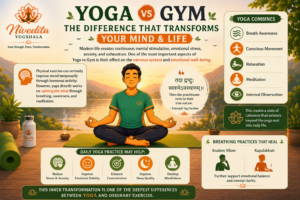
Yoga combines:
- Breath awareness
- Conscious movement
- Relaxation
- Meditation
- Internal observation
This creates a state of calmness that extends beyond the yoga mat into daily life.
Daily yoga practice may help:
- Reduce stress and anxiety
- Improve emotional stability
- Enhance concentration
- Improve sleep quality
- Develop mindfulness
Breathing practices like Anulom Vilom and Kapalabhati further support emotional balance and mental clarity.
This inner transformation is one of the deepest differences between yoga and ordinary exercise.
Yoga vs Gym for Weight Loss and Fitness
Many beginners compare Yoga vs Gym mainly for weight loss results.
Gym workouts generally burn calories faster because of high-intensity movements and resistance training. They can be highly effective for rapid physical conditioning and fat reduction.
Yoga approaches weight loss more holistically.
Instead of focusing only on calories, yoga improves:
- Digestion
- Hormonal balance
- Breathing quality
- Sleep patterns
- Stress management
- Emotional eating habits
Dynamic yoga sequences such as Surya Namaskar improve strength, flexibility, stamina, and metabolism naturally.
Yoga also creates discipline and awareness around food and lifestyle, which supports sustainable health improvements.
Unlike exhausting workouts that may feel difficult to maintain long term, yoga often becomes a peaceful daily practice that people continue for years.
Can Yoga Replace the Gym?
The answer depends entirely on personal goals and lifestyle needs.
If someone wants:
- Competitive bodybuilding
- Heavy muscle gain
- Athletic conditioning
- High-intensity strength training
then gym workouts may be more suitable.
However, if someone seeks:
- Long-term wellness
- Mental peace
- Flexibility
- Emotional balance
- Healthy breathing
- Holistic living
then yoga may offer deeper long-term benefits.
In fact, many fitness professionals now combine yoga with gym training because yoga improves:
- Recovery
- Flexibility
- Joint mobility
- Breathing efficiency
- Mental focus
Yoga complements physical training beautifully.
Yoga as a Lifestyle Beyond Exercise
One of the greatest differences in Yoga vs Gym is that yoga extends beyond physical movement into daily living.
Traditional yoga includes:
- Discipline
- Breath awareness
- Meditation
- Ethical living
- Self-awareness
- Balanced lifestyle habits
The purpose of yoga is not only physical fitness but inner transformation.
The Hatha Yoga Pradipika describes yoga as a path that purifies both body and mind gradually through regular practice.
“शरीरं साधनं धर्मस्य।”
The body is the instrument for higher living.
Yoga respects the body not merely as a physical structure, but as a sacred vehicle for conscious living.
This spiritual and mindful dimension is what makes yoga unique.
Which is Better for Long-Term Wellness?
When discussing Yoga vs Gym for long-term wellness, yoga offers a more balanced and sustainable approach for many people.
The gym may improve external fitness effectively, but yoga nurtures:
- Physical wellness
- Mental clarity
- Emotional balance
- Breathing quality
- Spiritual awareness
According to World Health Organization, overall wellness includes both physical and mental health. Yoga naturally supports this integrated approach.
Yoga teaches patience, self-awareness, discipline, and peaceful living — qualities that improve not only health, but life itself.
Final Thoughts on Yoga vs Gym
The discussion of Yoga vs Gym should not become a competition between two practices. Both can support health in their own way.
The gym mainly develops external physical strength, while yoga creates harmony between body, breath, mind, and consciousness.
Yoga teaches us to move with awareness, breathe consciously, and live peacefully. It reminds us that true wellness is not only visible from the outside, but deeply experienced within.
“समत्वं योग उच्यते।”
Yoga is the state of balance.
For many people, yoga slowly becomes more than exercise — it becomes a path toward inner peace, mindful living, and lifelong wellness.